Showing posts with label mountain views. Show all posts

Wednesday, 28 October 2009

Uniquely Oman - Ibri souqs, forts, ruins, dates & wadi's

English Teacher in Oman

Sleepy Ibri

Oman 2008-2009


Background


In September of 2008, after nearly 6 months working in Sudan, I decided on a change of scenery. I got an English teaching post at the Ibri College of Applied Sciences in Oman through the Council for British teachers. 

Shortly after my arrival, 6 of us who were transferred to Ibri, a town about 3 hours’ drive from Muscat. It was a hardship posting. There are no malls or pools in Ibri, and not much to do except drive around and explore. It takes about a day, then there is not much else or different in the town itself. 

A rental car was thus essential in order to be mobile and independent. Weekends we either went to Muscat, Sohar or Nizwa where there were swimming pools and where one could get Western groceries. 

CfBT rented an apartment block and villas for the newcomers. Four of us had apartments in a block of flats. It was neat, clean and quite large, and of course fully air-conditioned, essential for survival in the Middle East. Ansu, my wife to be, came a month later from South Africa to join me. We got engaged on a hill outside a village called Dhank. In December we went back to SA for a couple of weeks to get married. 

Upon our return, we stayed 8 more months to complete my contract. We got along well with the other teachers and made regular trips with others in Oman and to Dubai.

Ansu - Ibri fort ruins

About Oman


Oman, officially the Sultanate of Oman, is an Arab country on the southeastern coast of the Arabian Peninsula. Holding a strategically important position at the mouth of the Persian Gulf, the country shares land borders with the United Arab Emirates to the northwest, Saudi Arabia to the west, and Yemen to the southwest, and shares marine borders with Iran and Pakistan. The coast is formed by the Arabian Sea on the southeast and the Gulf of Oman on the northeast. 

From the late 17th century, the Omani Sultanate was a powerful empire, vying with Portugal and Britain for influence in the Persian Gulf and the Indian Ocean. At its peak in the 19th century, Omani influence or control extended across the Strait of Hormuz to modern-day Iran and Pakistan, and as far south as Zanzibar (today part of Tanzania, also former capital). As its power declined in the 20th century, the sultanate came under the influence of the United Kingdom. 

Historically, Muscat was the principal trading port of the Persian Gulf region. Muscat was also among the most important trading ports of the Indian Ocean. 

Oman is an absolute monarchy. The Sultan Qaboos bin Said al Said has been the hereditary leader of the country since 1970. Sultan Qaboos is the longest-serving current ruler in the Middle East and sixth-longest current reigning monarch in the world.

Oman has modest oil reserves, ranking 25th globally. Nevertheless, in 2010 the UNDP ranked Oman as the most improved nation in the world in terms of development during the preceding 40 years. A significant portion of its economy is tourism and trade of fish, dates, and certain agricultural produce. 

This sets it apart from its neighbors’ solely oil-dependent economies. Oman is categorized as a high-income economy (Wikipedia).

Ibri fort souq: Omani honey - Quite expensive at 20 OMR a bottle

About Ibri


Ibri is both a city and Province in the region Az Zahirah, in northwest Oman. The Wilayat of Ibri is distinguished by its archaeological landmarks including forts, castles, and towers. Ibri is the capital of the northern Al Dhahirah region. 

Ibri is a sprawling town with a major highway, Hwy 21, linking it to the border town of Buraimi in the northwest and Nizwa in the southeast, it has a few sights to keep a visitor busy – including some impressive forts. The town mostly features on itineraries as a friendly stopover en route to or from the United Arab Emirates. There are also a number of largely unvisited wadis in the area that are home to traditional plantation villages.

Ibri is 2 hours distance from Al Ain. It is located at a distance of 135 miles (217 km) from the capital Muscat. 

Weather in Ibri is usually hot and dry, with temperature in summers ranging from 32 to 52 °C. From December to February the weather is relatively cooler, with temperatures ranging from 10 to 20 °C. 

Historically, Ibri was known for its market and for fruit. There are 2 colleges in Ibri: the Ibri College of Technology and the College of Applied Sciences (Wikipedia).

The main Ibri to Nizwa road below with adjacent wadi - taken from Ibri hill

Souqs


A souq or is a marketplace or commercial quarter in Western Asian, North African and some Horn African cities. 

In general, a souq is synonymous with a bazaar or marketplace, and the term souq is used in Arabic-speaking countries.

The fresh-produce souq


Fresh fish

Fish galore

Fruit and veg

Fort souq


Fort next to the souq

Halawa, an Omani sweet/pudding - All high in sugar

Fabrics galore ....usually from India & Pakistan


Souq alley


Ibri fort ruins & wadi


Ansu - en route to the fort ruins

En route to the ruins

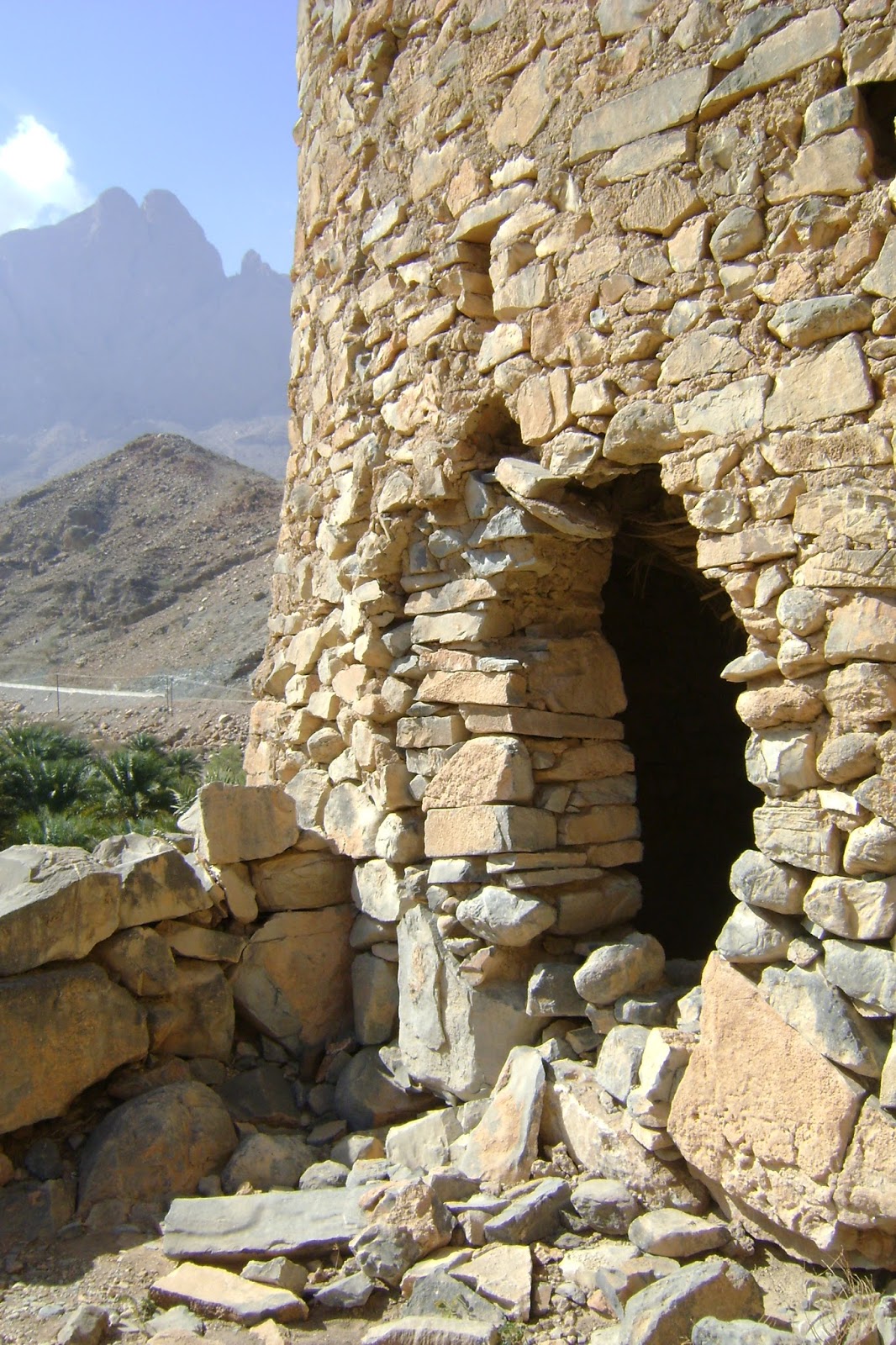
Ibri fort ruins

Fran and her husband at the ruins looking down at the wadi below

Ansu and I at the Ibri fort ruins - behind us a wadi (dry riverbed)

Fort ruins. It has since been restored, but in 2008 it was still in ruins

Bridge across the wadi

Bridge across the wadi

Wadi 

Water level marker in the wadi

Wadi


Fort ruins


Ibri mountain views


One day in September of 2008, I explored an older section of Ibri. I climbed the hill and took these photos of the surrounding area


Ibri views


Ibri views

Ibri views

Ibri views

Old Ibri - Ruins & date plantations


Omani girl on her bike near ruins

Indian laborer on his bike to work

Older neighborhood - Ibri

Farming district - Date plantations

Farming district - Date plantations

Farming district - Date plantations

Date plantation scenery

Colorful Oman entrance

The older section of Ibri

To view my experience teaching in Ibri, click here!


Saturday, 11 July 2009

Spectacular mountain views - Jebel Shams and Wadi Ghul

English Teacher in Oman

Exploring Jebel Shams & Wadi Ghul

Oman 2008-2009


Background


Upon our arrival in Ibri as teachers of the Ibri COAS, my colleagues and I made an effort to explore the area as quick as possible. Oman is the most underestimated jewel in the world, from a tourism perspective. I remember when I told people that I'm going to Oman, they did not even know there was a country named Oman. 

We rented cars and that gave us a lot of freedom and mobility to explore. Some of the most scenic spots relatively close to us were Jebel (Which is Arabic for mountain) Shams (sunshine) and Wadi (dry riverbed) Ghul. We visited Jebel Shams by car and took some lovely pics of the views. A bunch of the male teachers decided later on in 2009 to do the Wadi Ghul hike. It turned out to be an extremely tough hike climbing the mountains and the extreme heat made this a climb of endurance.


Ruins on the Wadi Ghul hike


About Oman


Oman, officially the Sultanate of Oman, is an Arab country on the southeastern coast of the Arabian Peninsula. Holding a strategically important position at the mouth of the Persian Gulf, the country shares land borders with the United Arab Emirates to the northwest, Saudi Arabia to the west, and Yemen to the southwest, and shares marine borders with Iran and Pakistan. The coast is formed by the Arabian Sea on the southeast and the Gulf of Oman on the northeast. The Madha and Musandam exclaves are surrounded by the UAE on their land borders, with the Strait of Hormuz (which it shares with Iran) and the Gulf of Oman forming Musandam's coastal boundaries.

From the late 17th century, the Omani Sultanate was a powerful empire, vying with Portugal and Britain for influence in the Persian Gulf and the Indian Ocean. At its peak in the 19th century, Omani influence or control extended across the Strait of Hormuz to modern-day Iran and Pakistan, and as far south as Zanzibar (today part of Tanzania, also former capital). As its power declined in the 20th century, the sultanate came under the influence of the United Kingdom. 

Historically, Muscat was the principal trading port of the Persian Gulf region. Muscat was also among the most important trading ports of the Indian Ocean. Oman is an absolute monarchy. The Sultan Qaboos bin Said al Said has been the hereditary leader of the country since 1970. Sultan Qaboos is the longest-serving current ruler in the Middle East, and sixth-longest current reigning monarch in the world.

Oman has modest oil reserves, ranking 25th globally. Nevertheless, in 2010 the UNDP ranked Oman as the most improved nation in the world in terms of development during the preceding 40 years. A significant portion of its economy is tourism and trade of fish, dates, and certain agricultural produce. This sets it apart from its neighbors’ solely oil-dependent economies. Oman is categorized as a high-income economy (Wikipedia).

Ansu and I near Jebel Shems, October 2008 (Our first photo as a couple)

Visiting Jebel Shams - 2008


Jebel Shams (mountain of the sun) is a mountain located in north-eastern Oman north of Al Hamra town. It’s the highest mountain in the country and part of the Al Hajar Mountains range. It is a popular sightseeing area located 240 km from Muscat. In the summer, the temperature is around 20 °C  and in the winter it drops to less than 0 °C (Wikipedia).

Drive towards Jebel Shams - Vantage point stop


Village & agriculture in wadi - Scenery on our drive towards Jebel Shams

Village & agriculture in wadi - Scenery on our drive towards Jebel Shams

Village & agriculture in wadi - Scenery on our drive towards Jebel Shams

Up a mountain pass towards Jebel Shams


Up against this hill with 2 Nissan Tiida, filled with teachers

Dirt road mountain pass

Then the rain came

Stopping to admire the view

Stopping to admire the view

Ansu posing in the rain

Posing in the rain

Jebel Shams


Jebel Shams - Jonathon Fowler at a vantage point

Bedouin Curios for sale - Ansu looking checking out the merchandise

Bedouin Curios for sale

Steve at another vantage point

Ansu at a vantage point overlooking the gorge

The gorge below

The gorge below

Bedouin tent - Jebel Shams mountain resort

Hiking at Wadi Ghul - 2009


Ghul or Wadi Ghul is an abandoned village, located to the northwest of Al Hamra in Oman. The area is referred to as the "Omani Grand Canyon" or "The Grand Canyon of Arabia". It is near Jebel Shams, the highest mountain peak in Oman (Wikipedia).

At Wadi Ghul

Bedouin kid selling trinkets to tourists

Bedouin kid selling trinkets to tourists

Bedouin kid selling trinkets to tourists

Start of the hike into the mountain - Ruins with Omani flag

Ruins along the hike

View of the wadi where we started

View of the wadi where we started

View of  the wadi where we started

Posing - higher up the mountain

The terrain we had to walk on - higher up the mountain

Rocky outcrop

Farook, a colleague and fellow South African, during the climb

When we came down, these village kids greeted us

To view my experiences as an English Teacher in Ibri, click here!